admin
admin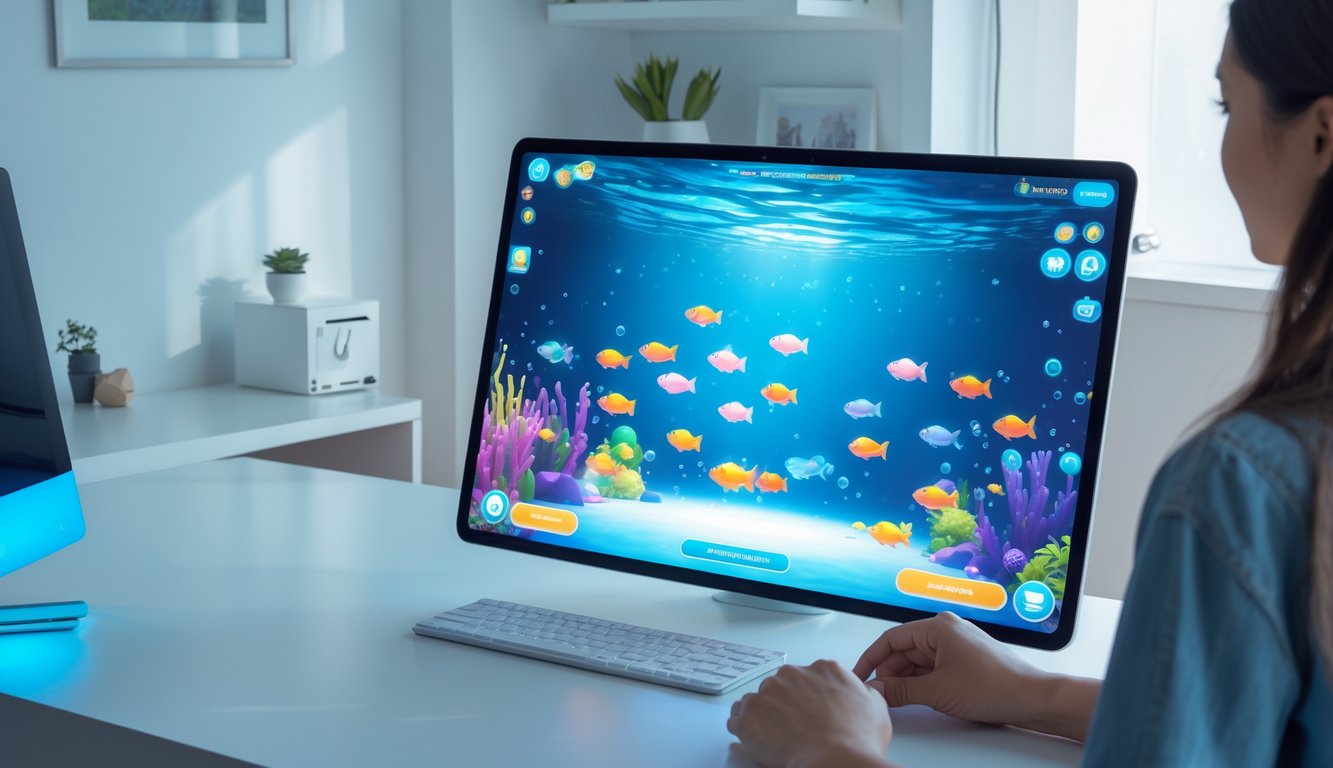
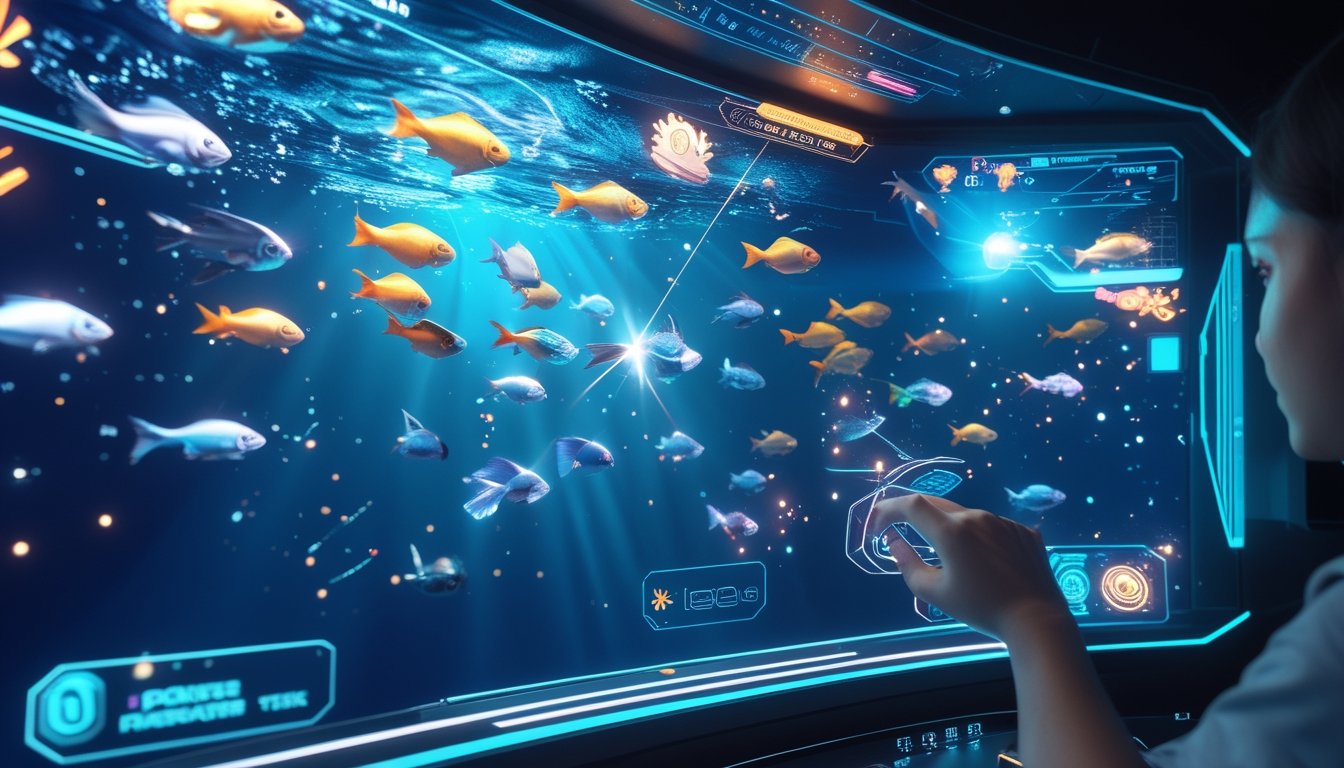
You want a fish-shooting site that pairs thrilling gameplay with crisp visuals, smooth performance, and fair play. The best HD fish shooting sites in 2026 deliver true 4K-ready graphics, responsive lock-on mechanics, and transparent RTP plus security measures that protect your funds and data.
This guide shows how to spot platforms that balance stunning visuals with real-world playability, compares top providers, and explains which device setups and security features matter most. Expect practical tips on gameplay features, community options, and what future graphic upgrades mean for your experience.
Understanding HD Graphics in Fish Shooting Games
High-definition graphics in fish shooting games affect object detail, animation smoothness, lighting, and effects. They determine how clearly you can identify targets, read UI elements, and judge weapon feedback during fast gameplay.
What Makes Graphics High Definition
High-definition graphics combine resolution, texture quality, and rendering techniques. Resolution defines pixel count—commonly 1080p or 4K on modern devices—so sprites and backgrounds appear crisp. Texture maps and normal maps add surface detail to fish scales, coral, and weapon models, reducing flat-looking assets.
Advanced shaders handle reflections, refractions, and subsurface scattering for water and glass effects. Frame rate stability (60 fps or higher) preserves motion clarity; inconsistent fps causes noticeable input lag and visual stutter. Anti-aliasing and anisotropic filtering reduce jagged edges and preserve detail at oblique angles.
Optimization matters: level-of-detail (LOD) systems and efficient asset streaming keep memory use low on mobile devices while maintaining HD visuals. You benefit from these systems when the game runs smoothly without sacrificing graphical fidelity.
Visual Impact on Player Experience
HD visuals improve target recognition and reduce eye strain during long sessions. When fish types have distinct colors, patterns, and animations, you can prioritize high-value targets faster and make deliberate shots. Clear visual feedback—like particle bursts or hit markers—confirms successful hits and helps you adjust aim and timing.
Immersive lighting and particle systems increase perceived value and excitement for reward events. However, excessive effects can clutter the playfield; designers balance spectacle with readability so you don’t miss fast-moving or small targets. HUD legibility in HD ensures critical info—ammo, score multipliers, timers—stays readable on varied screen sizes.
You gain tactical advantage from predictable animations and consistent hit reactions. Games that tune animation curves and collision visuals let you judge bullet travel and target vulnerability precisely.
Trends in Game Graphics for 2026
2026 pushes real-time ray tracing and hybrid lighting into mid-range hardware, improving reflections on wet surfaces and accurate soft shadows in underwater scenes. Many titles use dynamic weather and volumetric fog to vary visibility and create event-based tension during raids or boss waves.
Procedural generation of background fauna and particle systems reduces repetition while conserving storage. Expect more adaptive UI scaling and per-device quality presets that prioritize frame rate on mobile while enabling near-console visuals on high-end phones and PCs.
Networked multiplayer modes increasingly synchronize visual states to prevent desyncs that affect aim. Look for games that offer granular graphics toggles—motion blur, particle density, post-processing—so you can tailor visuals for clarity or spectacle depending on your playstyle.
Criteria for Selecting the Top Fish Shooting Platforms
Focus on measurable safeguards, technical reliability, and interface clarity that directly affect your safety and play experience. Prioritize licensed operators, low-latency performance, and intuitive controls to get consistent HD graphics and fair payouts.
Licensing and Safety Considerations
Check for an active gambling license from recognized regulators such as Malta, UKGC, or a reputable regional authority. Licensing proves legal oversight; verify license numbers on the site and cross-check with the regulator’s public register.
Inspect RTP (Return to Player) transparency and whether independent audits (e.g., eCOGRA, iTech Labs) are published. Audits and published RTP ranges reduce the risk of manipulated outcomes and help you compare expected payout rates across providers.
Confirm strong data security measures: look for TLS/HTTPS, clear privacy policies, and two-factor authentication options. Also review responsible gaming tools—deposit limits, self-exclusion, and easy access to support—so you can manage risk without hunting through menus.
Performance and Stability
Measure load times and frame-rate stability on devices you use most: smartphone, tablet, or desktop. Platforms that maintain 30–60 FPS in HD scenes offer smoother targeting and reduce missed shots during crowded onscreen events.
Check server latency and connection resilience; platforms that list CDN use or regional servers typically show lower lag. Test for session persistence—ability to reconnect without losing progress—especially if you play on mobile networks.
Assess how the game scales graphics and bandwidth: adaptive bitrate streaming or multiple graphic presets help maintain playability on slower connections. Read player reports about crashes or desyncs before committing funds.
User Interface and Ease of Navigation
You should be able to change bet size, weapon type, and auto-fire settings within two taps or clicks. Controls must be logically grouped and labeled: aim, fire, special weapon, and score panel should be visible without opening extra menus.
Look for clear visual feedback: hit markers, damage values, and target priority indicators simplify decision-making during fast scenes. Tooltip explanations and a concise tutorial mode reduce the learning curve for new mechanics.
Evaluate lobby layout and search filters for tables, jackpots, or tournament rooms. A good UI offers quick access to account balance, transaction history, and support chat so you manage funds and issues without interrupting gameplay.
Gameplay Features in Modern Fish Shooting Titles
Modern fish-shooting games emphasize fast, visible rewards, varied combat choices, and settings that scale to your skill and budget. Expect distinct play modes, timed bonus encounters, and difficulty systems that adjust enemy behavior and payout rates.
Variety of Game Modes
You’ll find modes that change payout structure and player interaction. Common options include single-player practice rooms, competitive four-player arenas, and thematic story stages with scripted boss encounters. Practice rooms let you test weapons without risking high wagers, while multiplayer arenas put real players in the same screen competing for kills and jackpots.
Arcade-style campaign stages often present waves of fish with increasing speed and HP, culminating in boss fights that require teamwork or special weapons. Some titles offer timed events and rotating maps to keep matchups fresh and to shift which species yield higher multipliers.
Bonus Rounds and Special Weapons
Bonus mechanics drive the biggest wins and provide tactical variety. Trigger conditions range from hitting special target fish to filling a progress meter; rewards include coin dumps, free rounds, and entry to multi-boss chambers. You should learn trigger patterns—some rare fish appear only during specific map states.
Special weapons include multi-shot cannons, chain-lasers that pierce targets, and lock-on missiles for high-HP bosses. Upgrades are often temporary or consumable, purchasable with in-game coins or earned via events. Know the cost-to-benefit ratio: some weapons consume disproportionately more ammunition relative to expected payout on small fish.
Adaptive Difficulty Levels
Adaptive systems tune enemy HP, spawn rates, and reward multipliers to balance volatility across sessions. Games use soft caps or dynamic scaling so fish health increases with your average shot power, preventing easy exploits and extending playtime. This keeps challenge consistent whether you use low-stake bullets or high-power cannons.
You can usually select a risk tier or table that sets baseline difficulty and house edge. Pay attention to table rules: “high-risk” rooms raise fish HP but also increase multiplier ceilings, while “low-risk” rooms favor longer sessions with smaller, steadier payouts.
Comparing Providers Offering the Best Visuals
You’ll find providers that prioritize photorealistic water, high-frame-rate particle effects, and scalable HD assets. Focus on studio rendering techniques, device performance, and how each provider balances visual fidelity with latency and battery use.
Game Studios Known for Superior Graphics
You should look for studios using physically based rendering (PBR), advanced particle systems, and dynamic lighting. Studios like those adopting Unity HDRP or Unreal Engine pipelines deliver richer reflections, volumetric fog, and realistic fish shaders that respond to scene lighting.
Check technical priorities: texture resolution, LOD systems, and GPU-driven animations. Those reduce pop-in on mobile and maintain smooth frame rates on mid-range devices. Also compare asset streaming and compression strategies, since they affect load times and visual consistency across platforms.
Evaluate studio support for HDR displays and adaptive resolution scaling. Studios that publish performance benchmarks for target devices make it easier for you to predict in-play visuals and battery impact.
Notable Releases in 2026
You’ll see 2026 releases emphasizing cinematic sea environments and higher polygon counts for flagship titles. Expect several titles to ship with 4K-ready textures and 60–120 FPS modes for modern hardware, while still offering 30 FPS battery-saver options for phones.
Look for features like ray-traced reflections on desktop and console builds, motion-blur-free interpolation for fast-moving fish, and detailed particle wakes from torpedoes or nets. Some releases include modular graphic presets so you can prioritize frame rate or detail.
Prioritize titles that publish device-specific patches and ongoing visual updates. Those maintain graphical quality over time and let you choose the best balance between visuals and responsiveness for your device.
Optimizing Device Compatibility
You need smooth frame rates, responsive controls, and minimal input lag to enjoy HD fish-shooting games. Focus on OS versions, GPU/CPU capability, and network stability to get consistent visual fidelity and payout responsiveness.
Mobile Versus Desktop Experience
Mobile delivers touch controls and portability. Choose a phone with at least a 90 Hz display and a mid-to-high tier SoC (Snapdragon 7/8-series, Apple A14 or newer) to keep animations fluid and particle effects smooth. Ensure 4–6 GB RAM free for the game; background apps will drop FPS and increase stutter.
Desktop provides stronger GPUs and more precise input. For Windows, use a dedicated GPU (NVIDIA GTX 1650 or AMD Radeon RX 6400 and up) to handle 1080p/1440p textures and multi-effect bosses. Use a wired mouse and keyboard for lower input latency. On both platforms, prioritize a stable internet connection (5–20 ms ping) and use Ethernet or 5 GHz Wi‑Fi to reduce packet loss.
Recommended Hardware Specifications
Match hardware to the visual preset you want: for Low/Stable play, target CPU cores 4+ and integrated graphics like Intel UHD with 8 GB RAM. For High/HD play, aim for a quad‑core or better CPU (Intel i5/Ryzen 5 or equivalent), 16 GB RAM, and a discrete GPU with 4 GB VRAM.
Recommended minimums (practical baseline):
- CPU: 4 cores / 2.5 GHz
- RAM: 8 GB
- GPU: Integrated or entry-level discrete
- Network: 10 Mbps stable, <50 ms ping
Recommended for smooth HD (preferred):
- CPU: 6+ cores / 3.0+ GHz
- RAM: 16 GB
- GPU: NVIDIA GTX 1650 / AMD RX 6400 or better
- Storage: SSD for faster asset streaming
- Network: Wired 50 Mbps, <20 ms ping
Keep firmware and GPU drivers updated, enable GPU performance mode in system settings, and close background syncing or streaming apps to avoid frame drops during intense boss encounters.
Security Measures and Fair Play Standards
You should expect provable randomness, documented auditing, encrypted data flows, and built-in tools to limit play and losses. These safeguards protect game integrity and help you control time and spending.
Random Number Generators
You should look for games that use certified RNGs (e.g., tested by iTech Labs, GLI, or eCOGRA). Certified RNGs ensure each shot outcome and prize trigger is independent and not predictable. Check the game or operator page for the testing lab name, the certificate number, and the date of the last audit.
Operators should publish RTP ranges and volatility metrics for each machine so you know long-term return expectations. Independent audits and periodic re-testing must be visible in a provider’s transparency reports. If a provider offers a public RNG seed or provably fair hash for session results, you can verify specific rounds yourself.
Responsible Gaming Tools
You should have access to immediate, user-controlled limits: deposit caps, session time reminders, loss limits, and self-exclusion options. These tools must be adjustable in your account settings and take effect without delay.
Look for mandatory reality checks that pop up after configurable intervals and clear contact links for support services. Operators should also offer transaction histories and exportable play logs so you can monitor patterns and reconcile financial activity. If you see limits that require lengthy support requests to change, treat that as a red flag.
Community and Social Features
Strong social systems let you play with others, track performance, and aim for visible rewards. Look for real-time interaction, clear ranking mechanics, and options to form or join groups that fit your play style.
Multiplayer Experiences
You can join synchronous tables or rooms where up to several dozen players share a single ocean map. Real-time voice chat, quick text emotes, and private table creation let you coordinate shots, trade tips, or run cooperative boss hunts with friends. Matchmaking based on bet level and past win rate helps keep sessions competitive and fair, while cross-platform play ensures you can team up from PC, Android, or iOS.
Expect latency indicators and anti-cheat monitoring to appear in the interface so you can spot lag or suspicious behavior before committing stakes. Some titles add social progression—guilds, shared missions, and daily group objectives—that reward collective play with special skins, extra rounds, or VIP points.
Leaderboards and Tournaments
Leaderboards display multiple metrics: total winnings, highest single-shot payout, accuracy rate, and seasonal points. You should be able to filter by timeframe (daily/weekly/seasonal), region, and friend lists to see meaningful comparisons. Clear reward tiers and claimable prizes reduce confusion about what you earn for each rank.
Tournaments run in scheduled brackets or continuous ladder formats. Look for transparent entry fees, public payout tables, and spectate modes so you can watch higher-tier matches. Official tournaments often provide anti-fraud measures, referee logs, and on-chain or immutable records for high-stakes events to increase trust.
Maximizing Enjoyment and Winning Potential
Focus on managing your ammo, choosing maps and weapon types that suit your playstyle, and balancing time spent chasing big targets with steady small wins. Prioritize games with clear payout tables, responsive HD graphics, and features that reward skillful targeting.
Effective Strategies for 2026
Pick weapons that match target value and screen density. Use low-cost single-shot guns on crowded screens to conserve currency, and switch to higher-power weapons only for slow-moving or high-value fish. Track bullet-to-reward ratios: note how many bullets a specific fish typically requires across several rounds and favor targets with better return-per-bullet.
Watch movement patterns and spawn timers. Many fish types move in repeatable loops; time your shots for predictable crossings rather than firing continuously. Save special weapons (bombs, lasers) for boss waves or clustered spawns to maximize multi-target hits.
Use session bankroll rules. Set a fixed spend limit per session and break winnings into a play fund and a cashout pool. Adjust bet size dynamically: reduce after losses to extend play and increase slightly after disciplined short winning streaks to capitalize while avoiding tilt.
Profitability Versus Entertainment Value
Decide whether you play primarily for amusement or income, then configure settings accordingly. For entertainment, prioritize HD visuals, sound design, and varied boss encounters; play with moderate bets to enjoy longer sessions. For profitability, focus on lower-variance tables and games that let you control shot power precisely.
Compare return characteristics before committing real funds. Check game features such as payout multipliers, special-weapon frequency, and visible hit feedback; these affect expected returns and skill leverage. Track your results in a simple table: date, session length, total bullets fired, cash in, cash out, and net result. Use that log to spot which maps and weapon combos consistently yield positive net per-bullet metrics.
Balance enjoyment and profit by alternating session goals: one session aimed at fun with larger bets on cinematic maps, the next aimed at efficiency with conservative bets and tight shot discipline.
Future Developments in Fish Shooting Game Graphics
Expect faster visual fidelity gains, more realistic lighting and particle systems, and tighter integration between graphics and gameplay mechanics. These advances will change how you perceive depth, motion, and feedback in HD fish shooting titles.
Emerging Technologies
You will see ray tracing become standard for water reflections and caustics, producing accurate light behavior on waves and fish scales. GPUs from mid-range hardware to cloud instances now support real-time global illumination, so reflections and soft shadows will react to dynamic objects and player-fired projectiles.
AI-driven upscaling (e.g., neural reconstruction) and temporal denoisers will let developers push higher-quality shaders while keeping frame rates stable on mobile and PC. Procedural particle systems and compute-shader physics will produce dense schools of fish and realistic bubble/foam effects without huge CPU cost. Expect HDR color pipelines and per-pixel PBR materials calibrated for different display types, so your monitor or phone renders marine life with consistent contrast and specular highlights.
Expected Trends Beyond 2026
You should expect increased use of cloud rendering for ultra-high-detail scenes that stream frames or render layers to devices with limited power. This enables 4K or 8K visual assets, cinematic post-processing, and complex lens effects without requiring top-tier local hardware.
Adaptive content systems will tailor detail levels to player behavior: if you target fast-moving species, the engine prioritizes motion blur clarity; if you aim for aesthetic screens, it boosts volumetric lighting and texture detail. Multiplayer instances will synchronize visual state with lower bandwidth using state deltas and GPU-driven instancing, preserving visual parity across devices while reducing latency and data costs.